

Life in the Colonias of Tijuana, Mexico
By Nicholas Ballor, nSJ
Can we not give more?
You have been a blessing in my life. I am helping others in their rehabilitation.
My mother had come to La Casa de Los Pobres many years ago with my brother who had polio. She used to bring him to consultation. We lived in a poor neighborhood. We were too many people living there. My mother worked babysitting other people's children to survive.
The thought continues to haunt me as I think back on our recent visit. There is no excuse for allowing people, anywhere, to suffer such need.
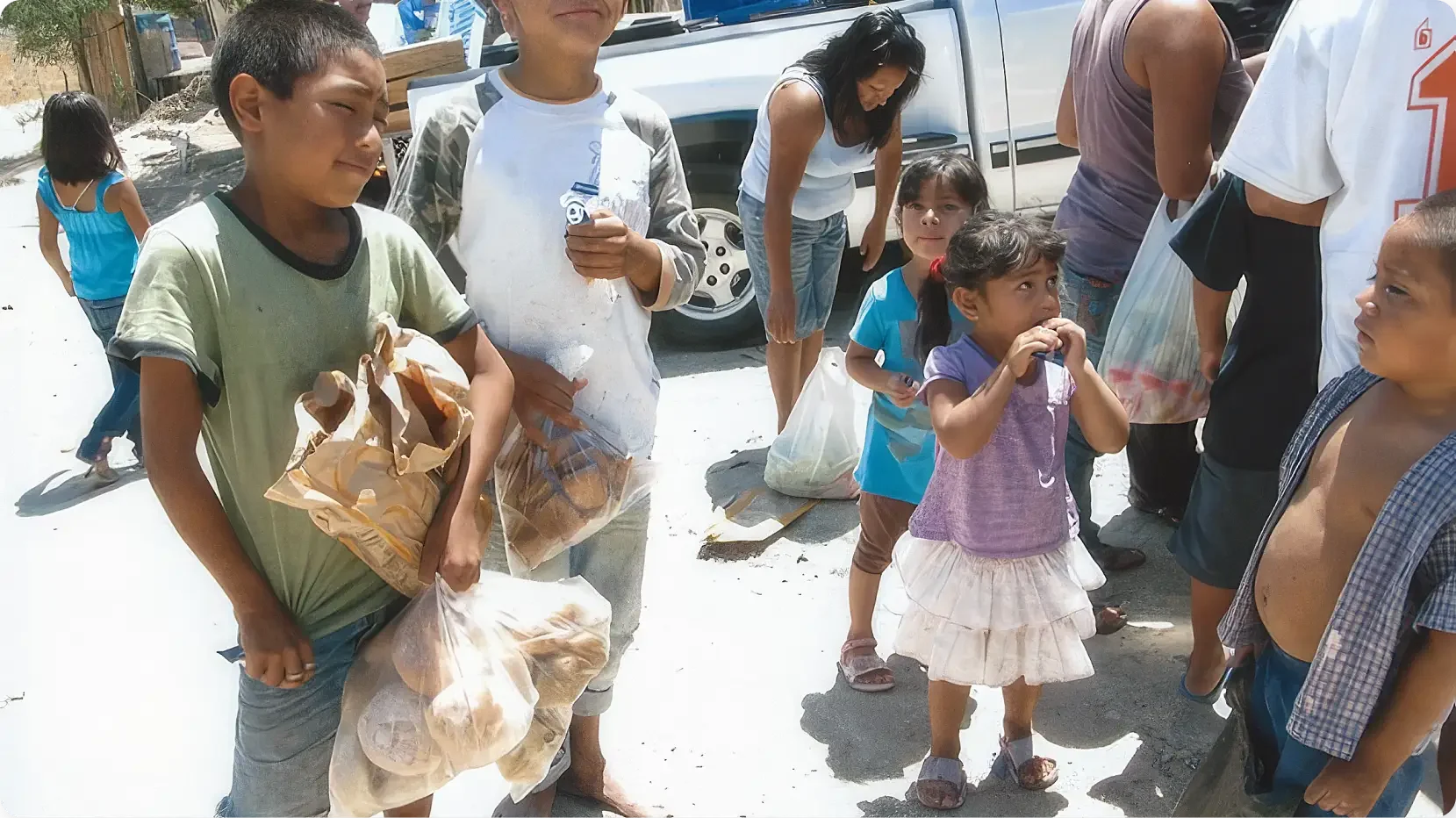
We stuffed our little truck full of food and a few padded chairs early in the morning and drove out from Tijuana for about 45 minutes to arrive at a remote colonia.
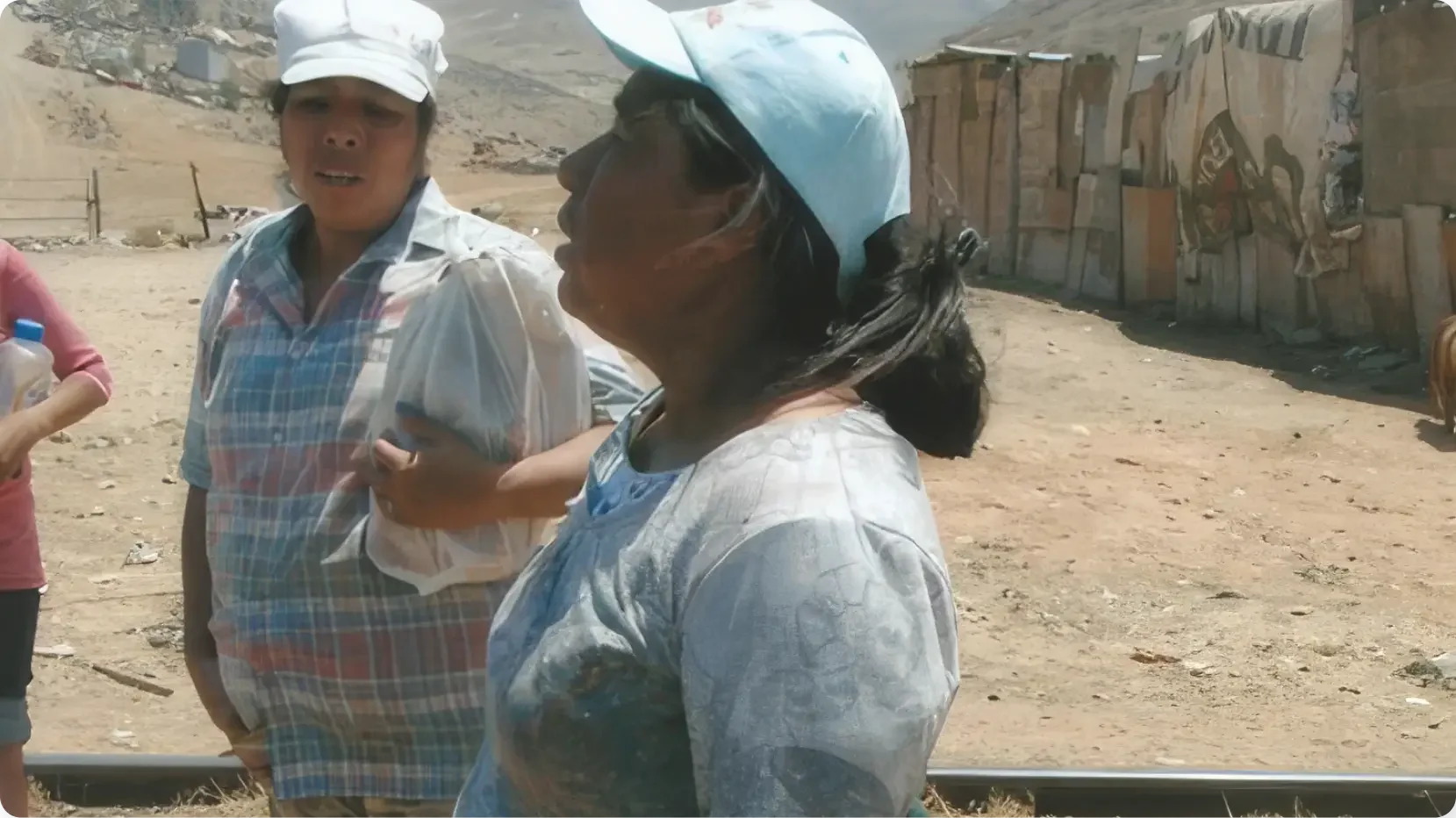
Smoke, dust, garbage everywhere, random collections of wood and scrap stacked together to pass for shelters — many side-by-side.
A scene of shades of brown dappled with black soot and white ash. To the left on our way to our distribution site was a cube the size of a small house, with noxious black smoke and flames escaping from above. This brown chimney was the community’s primeval kiln used to make bricks, which served as a main source of income.
As we drove further along the rough, dusty road, we honked our horn periodically to signal our most recent arrival with food and supplies. Our distribution site was at a high point in the colonia. Some railroad tracks were to our side. We waited there in the pounding heat, hoping that word of our arrival had spread. They came in fits. Perhaps by clusters of families or close friendships — communication networks.
It felt almost an insult to give to these poor so little.
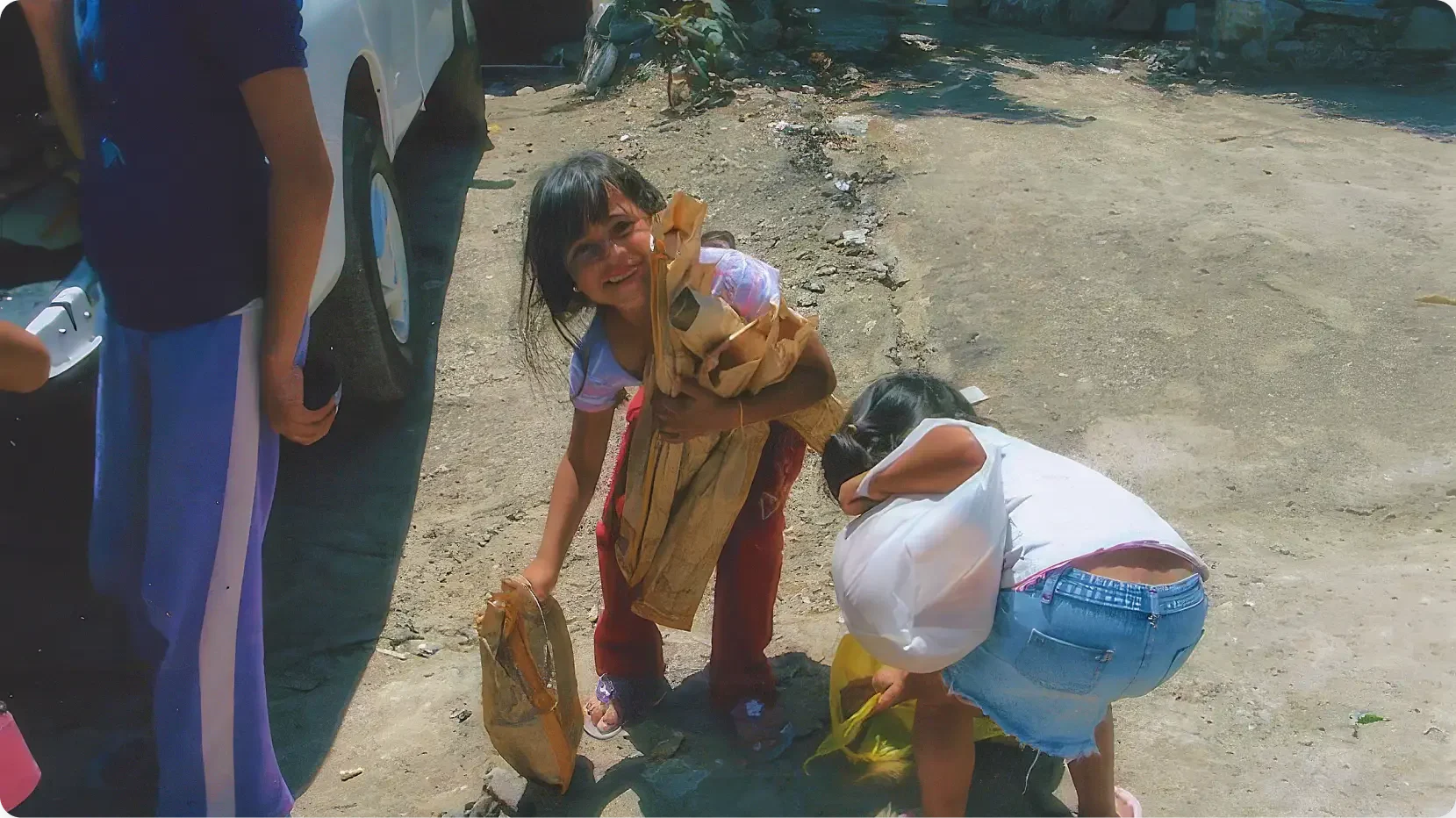
A pint of rice, a pint of beans, six pieces of fruit — a chair if you were among the lucky first arrivals. Imagine giving a small cup of cold water to a desert-stranded man. A welcome relief, but the thirst will return and the desert is vast. But we showed these few with what little we give that someone cares. They have a tangible sign of hope. They have love. They need so much more, but every river has its modest beginnings.
The people did not strike me as suffering starvation, nor did they seem unhappy. Certainly, most were covered in dust, but most were fairly clean. No one struck me as mentally ill, and I was encouraged by how joyful many seemed. The children in particular seemed happy. So excited to get their banana or an orange, which we could only give them after ensuring their parents received their provisions. The children so present in the moment, not giving a thought to what may come.
An illness here and there was apparent, but no dire problems. It is possible that those who came, or could come, were in the best of health and the rest, who we did not see, were left behind in the card-stack of scraps called “home.”
I muse on what more might help these in such need. An education? Spiritual nourishment? A leader and a message? Food is much needed, but so much the more some means of earning food and of living together in harmony as a community and as part of a much larger community at large. Is this community a testament to the dire need for reform of the very societal and governmental system in place that has allowed or even necessitated that such a colonia exist?
They need an advocate. Yes, they suffer greatly without food, and it is badly needed, but they need all the more for the very root causes of their suffering and poverty to be addressed and healed. These causes lie within and manifest themselves everywhere as dysfunctional families, communities, governments.
These suffering are Christ among us today, continuing to cry out and making painfully apparent the consequences of sin.
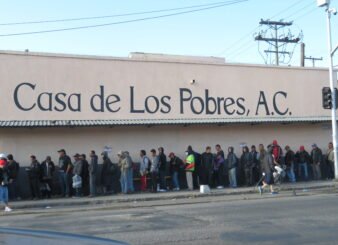
To help the Casa de Los Pobres, please donate.
"You have been a blessing in my life. I am helping others in their rehabilitation"
Those the Casa helps try to help others . . .
"My mother had come to La Casa de Los Pobres many years ago with my brother who had polio. She used to bring him to consultation. We lived in a poor neighborhood. We were too many people living there. My mother worked babysitting other people's children to survive.
"I was alcoholic, I was a tramp and used to walk barefoot. I entered rehabilitation in 2004 after being imprisoned due to alcoholism. On the third month, I started having a very strong pain in the stomach and went to an economical clinic. There, they calmed the pain, but in the following morning I was feeling very sick. I remember then that my Mom used to come to La Casa de Los Pobres, and I came on a Friday. They told me I needed to go to the Social Service department for a consultation pass, and I spoke with Sister Gudelia.
"She said there were no more consultation passes, but she looked at how sick I was, and told me to stay and wait until the last patient -- that she was going to take me to the best physicians in the clinic. I said inside, "Thank God."
"After the doctor saw me and asked me some questions, he told me that I had viral hepatitis and typhoid. Plus, gastroenteritis because I was drinking tap water and drinking water from puddles. The doctor asked me if I believe in God and told me they were going to do all they could ─ and that I better believe in God and that the only payment I was going to do was to return healed one month later.
"I started talking medication the doctor ordered, praying, and started believing in God. A month after, I started feeling very well and when I went to the Casa de Los Pobres clinic, they ran tests and found they were negative.
"I want to thank God, Doctor Rodriguez and to Casa de Los Pobres for all you have done for me. Now, I am receiving therapy and you have been a blessing in my life. God bless all the clinic staff. I'm very grateful. I no longer drink, and . . .
"I am helping others in their rehabilitation. Thanks."
Vallejo A.
Other Articles


Thank You!
Become a Sponsor and help support the mission of the Casa de los Pobres.